The refining of waste engine oil has evolved from a rudimentary disposal practice into a sophisticated industrial process that recovers valuable resources while meeting stringent environmental standards. This article provides a comprehensive overview of the complete waste engine oil refining process, examining each stage from initial collection through to final certification.
Stage 1: Precipitation and Separation
The journey of waste engine oil refining begins with precipitation and separation—a fundamental step that capitalizes on the varying densities of components within the waste oil. During this stage, impurities settle at the bottom while the oil rises to the top. Temperature plays a crucial role in this process; as temperature rises, oil viscosity decreases, making it easier for impurities to descend and settle. Consequently, sedimentation time is shorter at higher temperatures, underscoring the importance of precise temperature control.
This initial separation removes the most obvious contaminants: water, solid particles, and gross impurities. In a well-designed waste oil recycling plant, this stage ensures that downstream equipment receives feedstock that is sufficiently clean for further processing.
Stage 2: Dehydration and Light Fraction Removal
Following initial separation, the oil undergoes dehydration to remove remaining water and light fuel fractions. This step is critical because water can cause equipment corrosion and interfere with subsequent distillation processes. The removal of light fractions also prevents these volatile components from contaminating the base oil or diesel products.
For facilities targeting base oil production, this stage prepares the feedstock for the more demanding vacuum distillation that follows. The waste oil to base oil plant integrates dehydration and sedimentation systems as part of its comprehensive processing train.
Stage 3: High-Vacuum Fractional Distillation
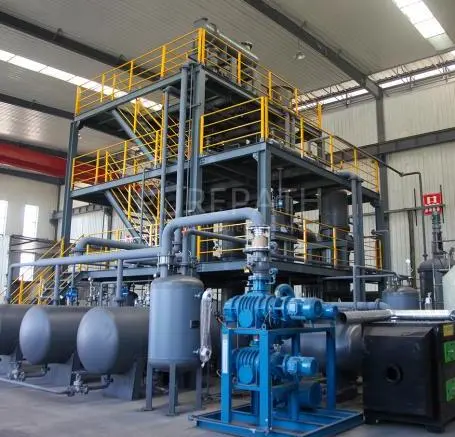
Modern waste engine oil refining relies heavily on high-vacuum fractional distillation. Instead of traditional heating tanks, contemporary industrial plants employ high-tech automatic systems known as Vacuum Distillation Columns, combined with Thin Film Evaporators (TFE) or highly effective Fired Heaters.
Working under deep vacuum conditions, these systems reduce the boiling point of heavy oil fractions. This allows operators to achieve optimal temperatures while avoiding overheating that would lead to decomposition and coking of equipment. The vapors formed rise through the apparatus and are collected at different stages to create high-quality distillates that will become re-refined base oils.
For facilities configured as a waste oil to diesel plant, this distillation stage produces diesel fractions that can be further upgraded through catalytic cracking and desulfurization.
Stage 4: Modern Refining and Polishing
Whereas conventional recycling involved extensive acid-base treatment (sulfuric acid and caustic soda), modern large-scale refineries no longer apply this technique due to strict regulations against acidic sludge disposal. Instead, medium-sized and large-scale waste oil reprocessing facilities use state-of-the-art solvent extraction plant technology or hydrotreating processes.
Solvent extraction employs specially designed, reusable, and environmentally safe solvents to isolate polymerized and asphaltic compounds without changing the base oil's chemical structure. The benefits are substantial: no toxic secondary pollution, guaranteed pure water-white color, and increased oxidation resistance of refined base oils.
The solvent extraction plant specifically designed for this application can achieve 98%-99% polished oil recovery, with oil loss of only 0.5%-1%. This efficiency far exceeds that of competitors relying on clay refining, acid treatment, or simple solvent blending tanks.
Stage 5: Neutralization Testing and Certification
Ensuring the quality and neutrality of reclaimed oil is crucial for its intended applications. A neutralization test provides final certification of the recycled engine oil. Two test tubes filled with distilled water are prepared, with phenolphthalein added to one and methyl orange to the other. The treated oil is added to both tubes, and after vigorous shaking, unchanged water colors signify neutral oil. The transformation is complete when the oil turns clear—a testament to successful recycling.
Stage 6: Filtration—The Finishing Touch
Filtration represents the final stage of waste engine oil refining and guarantees the highest level of purity and transparency. Modern environmentally friendly refineries have abandoned primitive filtering processes using filter paper or cheesecloth. Instead, automated Pressure Leaf Filters and Plate & Frame Filter Presses are used for professional oil filtration.
Oil is carefully filtered and processed through these enclosed industrial filtration systems to separate any tiny suspended particles or traces of carbon. This leads to the production of high-quality, transparent diesel fuel and pure base oil that conforms to global industry standards.
The Strategic Importance of Integrated Solutions
The transformation of waste engine oil into premium reusable energy resources represents a precise balance of chemistry, physics, and advanced industrial engineering. By moving away from outdated manual methods and embracing professional, scalable technologies—from vacuum fractionation to continuous chemical refining and industrial filtration—operators can unlock the true economic potential of hazardous waste streams.
As global ESG compliance standards tighten, establishing an efficient, compliant, and highly automated waste oil recycling plant is a strategic move that aligns heavy industry demands with true resource sustainability. PurePath specializes in delivering turnkey solutions that turn environmental liabilities into stable, long-term profitability.
Conclusion
The complete waste engine oil refining process encompasses six critical stages: precipitation and separation, dehydration, high-vacuum fractional distillation, modern refining and polishing, neutralization testing, and final filtration. Each stage builds upon the previous one, progressively removing contaminants and enhancing product quality. For operators and investors, understanding this complete process chain is essential for making informed decisions about technology selection, facility design, and market positioning.