The transformation of a raw material into a finished, precision part is a fascinating journey orchestrated by the seamless integration of software and hardware. The CNC turning process is a perfect example of this digital-to-physical transformation, where a detailed plan, written in G-code, is executed with mechanical precision. This article will trace this journey, highlighting how each stage, from programming to final inspection, relies on the accurate use of cnc turning g code to achieve a perfect outcome.
The journey begins long before the machine starts. Engineers use Computer-Aided Manufacturing (CAM) software to create a virtual model of the machining operation. Based on the desired final geometry of the part, the software generates a program—a list of commands in G-code. This is where foundational cnc turning g code commands are established, setting coordinates, spindle speeds (using codes like G96 for constant surface speed), and feed rates. Crucially, this is also the stage where toolpaths are generated. However, the CAM software's initial path is for a perfect, sharp tool. The programmer must then intelligently insert the critical compensation codes, G41 or G42, to instruct the machine on how to adjust for the real tool's nose radius.
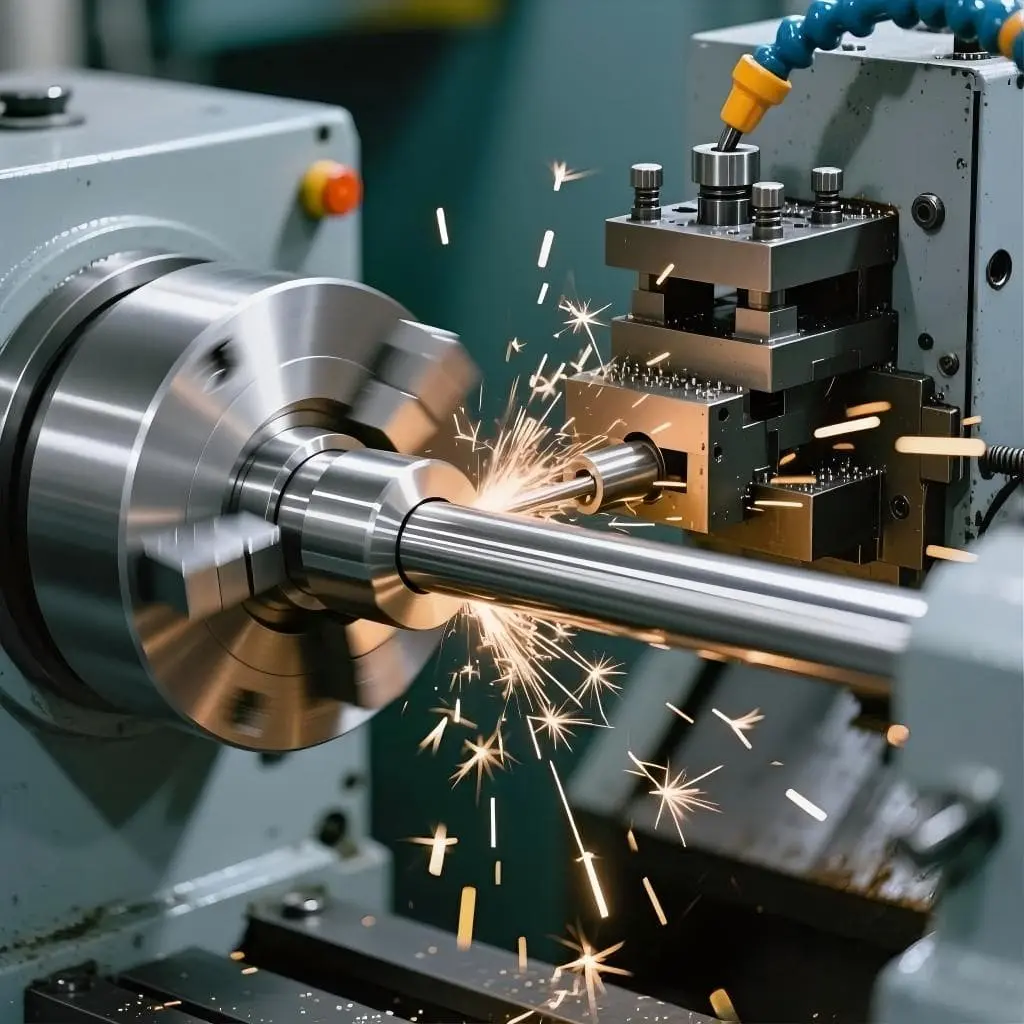
Once the program is verified, the physical CNC turning process commences. As outlined by JTR Machine's capabilities in Link 2, a bar stock of material (such as aluminum, steel, or plastic) is loaded into the lathe's spindle. The machine operator calls up the specific tool and inputs its offset data, including the all-important tool nose radius value into the control system. This step is vital; without the correct radius value, the G41/G42 cnc turning g code cannot function correctly. The machine then follows the programmed path. When it encounters a G41 or G42 command on a linear move (G01), the control system dynamically shifts the tool's trajectory, ensuring the cutting edge, not the theoretical point, follows the contour.
This meticulous attention to cnc turning g code is what enables the creation of complex geometries—external profiles, internal bores, threads, and grooves—with high precision and excellent surface finishes. After the machining is complete, the compensation is canceled with a G40 code. The final part is then inspected to ensure it meets all specified tolerances. For a service provider like JTR, this entire CNC turning process, governed by precise G-code, can be incredibly efficient, with the potential to deliver finished parts in as little as 24 hours. This seamless flow from digital instruction to physical part demonstrates how the sophisticated use of cnc turning g code is the backbone of modern, high-speed, and high-accuracy manufacturing.